An honest answer from two people who sell cabinets
Should you reface?
Or replace?
We sell cabinets for a living, so we have every reason to push you toward replacing. Read the part where we lay out when refacing is genuinely the right call, then decide for yourself.


Andrew Powell and Kaiden Walter
Co-founders, STL Cabinetry · Saint Charles, Missouri
Start here
Refacing sounds like a remodel. It is not one.
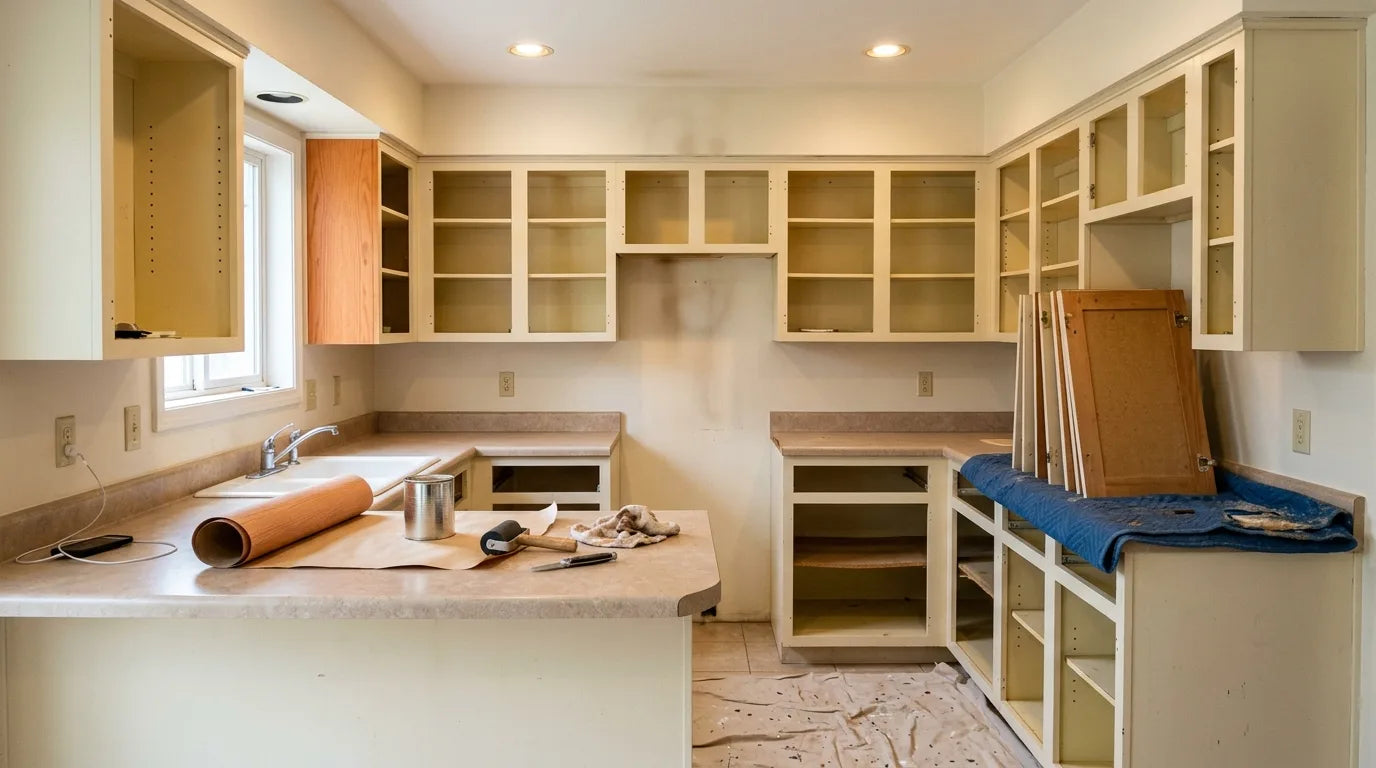
Here is the whole job. A crew pulls your doors and drawer fronts off and throws them away. They screw new ones on. Then they glue a thin sheet of veneer or laminate over the front edges of your existing cabinet boxes so the frames match the new doors.
That is it. Everything behind that new face stays exactly where it was. Same boxes, same shelves, same drawer slides, same interiors, same layout. You are buying a face.
Which can be fine. A face is sometimes all a kitchen needs. The trouble is what happens to a face that is glued on.
What a glued-on face looks like in year three.
Four failures, and the reason each one happens. None of them are workmanship problems. They are what the material does in a kitchen.
Beside the dishwasher
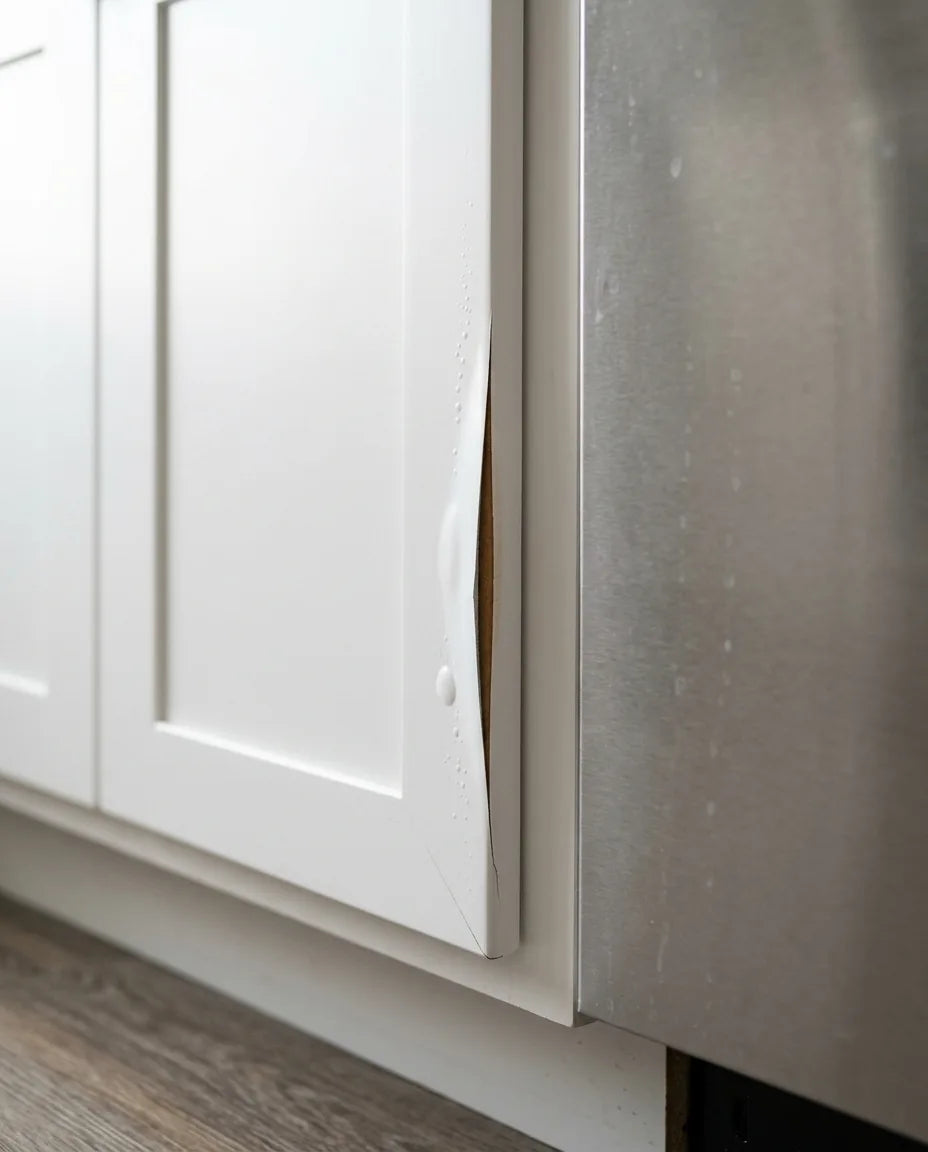
Thermofoil is a vinyl skin pressed onto an MDF core. Every wash cycle vents heat and steam straight up the side of that cabinet. The adhesive lets go, the skin lifts, and the core underneath starts to swell. It almost always starts on the edge nearest the dishwasher.
At the frame corner
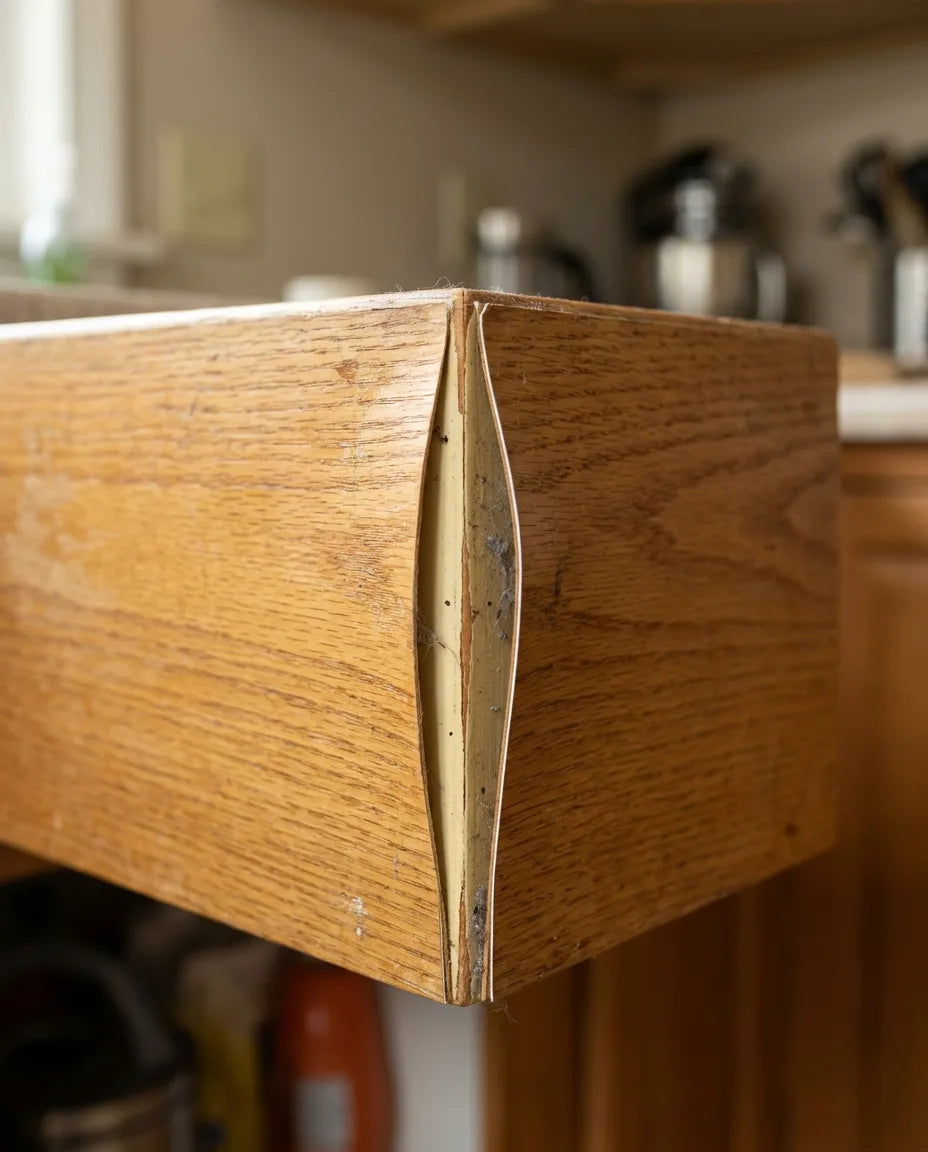
The veneer sheet over your face frames is held on with contact cement. The wood underneath moves with the seasons and the sheet does not move with it. The corner is where that fight gets settled. Once a corner lifts it collects dust, and it never lies back down.
Under the sink
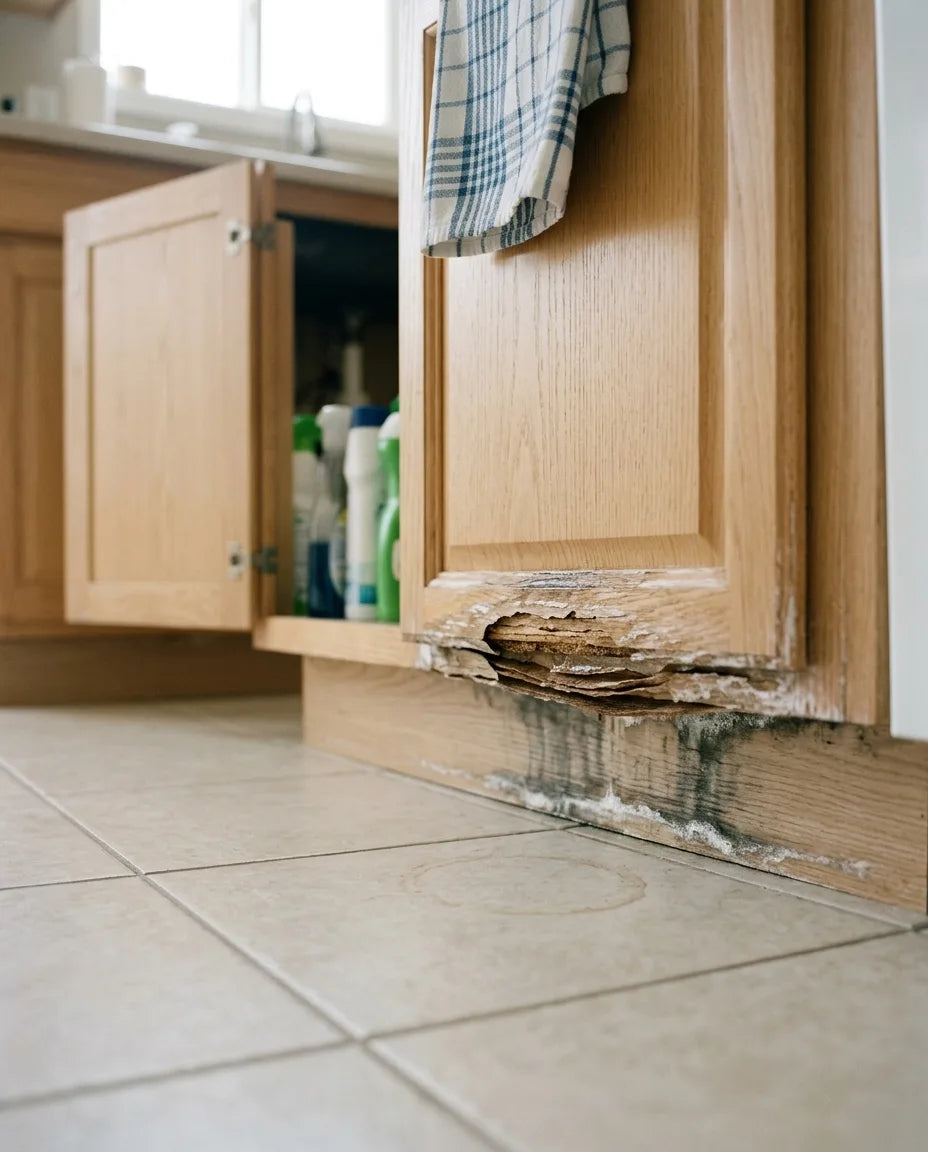
The bottom rail of a sink base takes water. A surface glued over particleboard has no way to shed it, so the core drinks it, swells, and separates into layers. Refacing puts a fresh surface on that same core and starts the clock again.
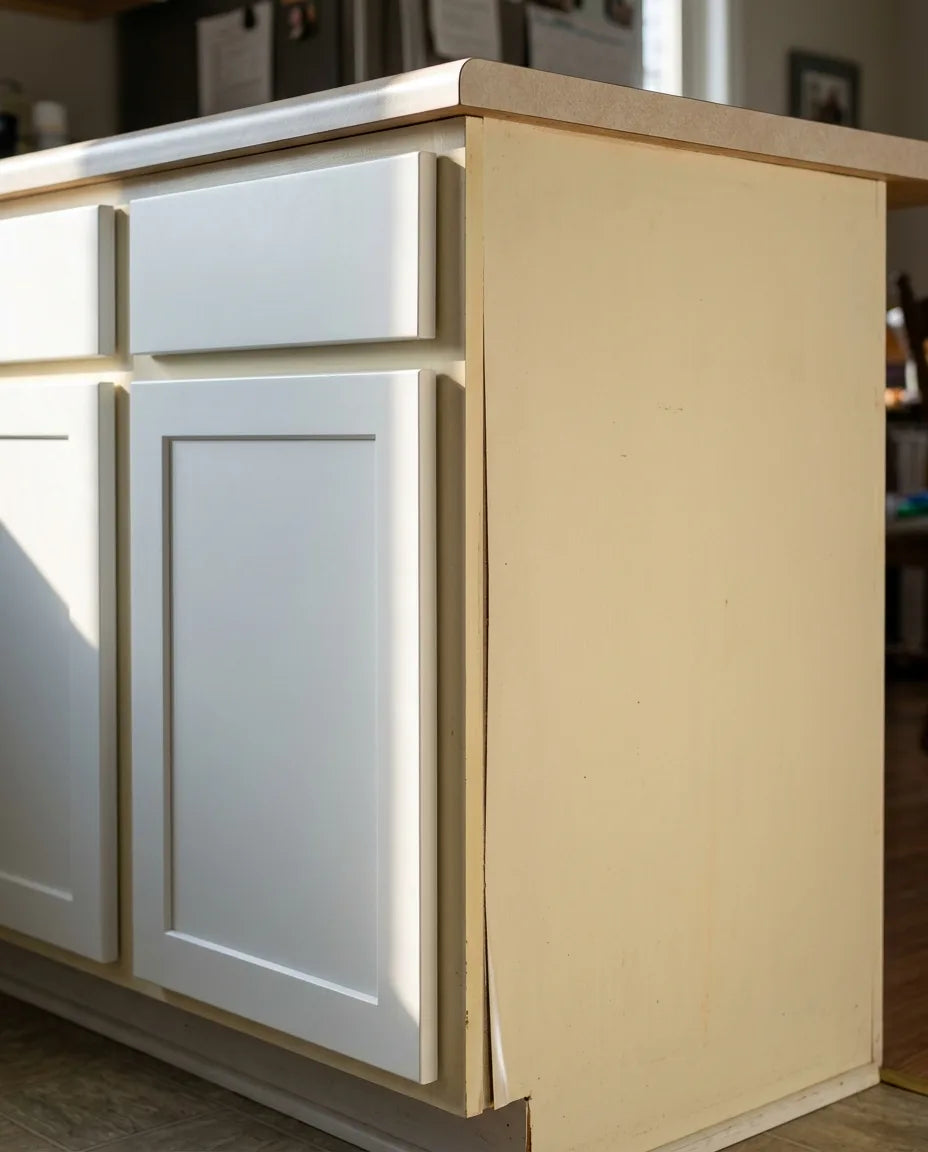
Two years of daylight
New doors and wrapped old frames are different materials carrying different finishes, and they do not age at the same rate. The doors stay cool white. The frames warm up. Then you start noticing the seam where one ends and the other begins.
Five things a reface does not fix.
Set the peeling aside for a second. Even a reface that holds up perfectly leaves all of this in place.
- 01
The oldest part of your kitchen stays
The boxes are what wear out. Particleboard sides, stapled corners, shelves with a bow in the middle. Nobody reface-quotes a box, because a reface cannot touch one. The doors were never the part that failed.
- 02
Your layout stays wrong
Refacing cannot give you a drawer stack where you have a door and a deep shelf, a wider sink base, a pantry, or a corner you can actually reach. If the kitchen does not work today, it will not work with new fronts screwed onto it.
- 03
You open the door and it is the same kitchen
New fronts, original interiors. Same yellowed melamine, same shelf pin holes, same smell. The parts you touch every single day are the parts a reface leaves alone.
- 04
The moving parts stay tired
Hinges and slides do the work in a kitchen. New doors need new hinges so those usually get replaced, but the drawer boxes and the slides riding underneath them are the ones you already have.
- 05
Glue is holding the face of your kitchen on
That is not a figure of speech, that is the actual engineering. Every failure above is downstream of one adhesive bond doing a job in a room full of heat, steam, and water.
Now the honest part
Sometimes refacing is the right call.
We would rather you not hire us than hire us for the wrong thing. Reface if all four of these are true:
- Your boxes are solid. Open a door and look at the side wall. Real plywood, no sag in the shelves, no swelling at the bottom. That is worth keeping.
- Your layout already works. You are not moving the sink, not adding a pantry, not trying to fix the corner nobody can reach.
- You are selling soon. Inside about two years, and you need the kitchen to show well for photos and walkthroughs.
- You cannot lose the kitchen. A reface happens in place over a few days. Replacing cabinets means the kitchen is out of service for the install window. If that window is genuinely impossible for your household, that is a real reason.
If that is you, reface it and do not feel bad about it. Hire somebody good, ask what they are bonding to your face frames, and ask what they do differently on the cabinet beside the dishwasher.
The other side
What new cabinets actually change.
A reface replaces your doors and the look of your frames. New cabinets replace the doors, the boxes, the drawer boxes, the slides, the hinges, the interiors, and the layout. Every cabinet we sell is built the same way:
- 1/2 inch cabinet grade plywood box
- 3/4 inch adjustable plywood shelves
- Dovetail drawers with 5/8 inch solid wood sides
- 5-piece wood drawer front construction
- 3/4 inch full overlay solid birch doors, MDF center panel
- 6-way adjustable concealed European soft-close hinges
- Steel concealed undermount full-extension soft-close glides
- Metal bracket reinforcement in the base cabinets
- UV-coated natural interiors
- 4 1/2 inch high, 1/2 inch thick plywood toe kick
Soft-close is standard on the hinges and the glides both, not an upgrade line. Every drawer front is 5-piece construction, never a slab. And the interiors are UV-coated, which is the part a reface never touches and the part you actually open every day.
The money
The shortcut is usually the more expensive one.
This is the part that surprises people, so we will say it plainly. We typically find that refacing quotes come in above what we would charge to replace the cabinets outright.
Refacing is labor. Somebody is in your kitchen for days, pulling every door, then cutting and fitting veneer around every frame by hand, one cabinet at a time. That labor is most of the invoice, and labor is the one line on any quote that never gets cheaper.
Run the math yourself
Refacing is priced per door and drawer front.
That is the unit that matters. The total moves with how many openings your kitchen has, not with how big the job feels.
- Published 2026 averages put a single refaced door around $435, and a full kitchen reface between $5,000 and $13,000.
- Go count yours. Doors plus drawer fronts, including the ones you forget about in the corner. Most kitchens have more openings than people guess.
- Multiply. If your count puts you near the top of that range, you are paying new cabinet money to keep the boxes you already own.
Figures from HomeGuide's 2026 cabinet refacing cost guide, not from us. Get your own quotes and check them against it.
Refacing
Typically quotes above our number
What gets replaced
Doors, drawer fronts, and a veneer skin on the front of your frames.
What stays
Boxes, shelves, drawer boxes, slides, interiors, layout.
New cabinets from us
$8,000 to $10,000
Typical for an average cabinet order
What gets replaced
Boxes, doors, drawer fronts, drawer boxes, slides, hinges, interiors, and the layout.
What stays
Nothing. That is the point.
And the surfaces
Where the rest of it comes from.
We make our money on cabinets, priced fairly. Countertops go through at our fabricator's actual dealer cost and flooring at our distributor's actual dealer cost. We make nothing on either one, and we will show you the invoice. Depending on how you order, you may qualify for up to 40% off our cabinets.
Three real numbers from that:
- The same Taj Mahal quartzite slab other shops quote at $130 to $150 per square foot goes out our door at $70.
- CoreTec equivalent luxury vinyl plank at $3.09 a square foot, against $11.69 elsewhere.
- Counters and floors together typically save up to $30,000 on a full project.
So go get a refacing quote. Then get ours. Compare them on the total, and then compare them again on what each total actually buys you. We are completely fine with you making that comparison.
Not sure which one your kitchen needs?
Send a photo. If refacing is the right call for your kitchen, we will tell you that.
Proof
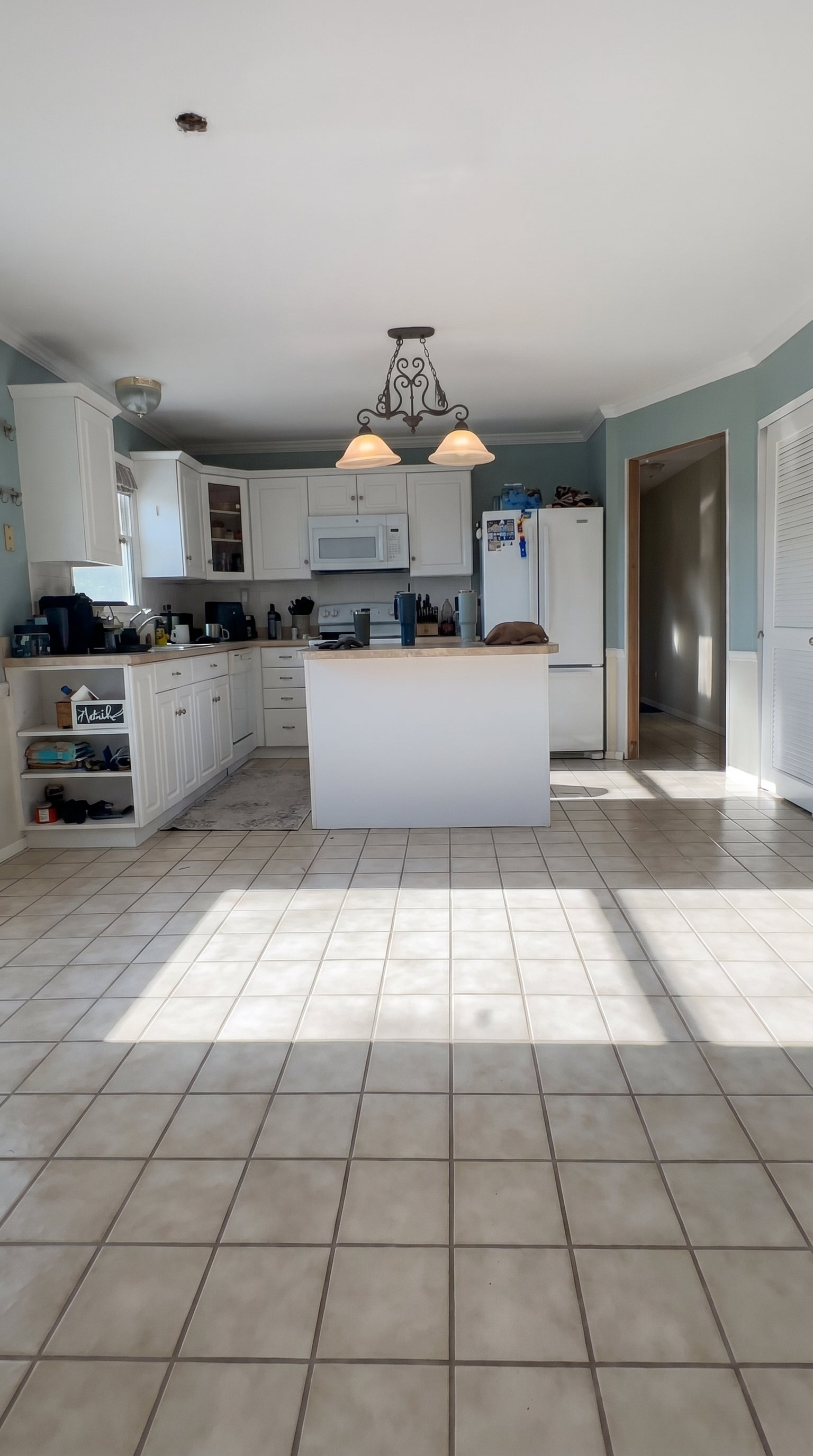
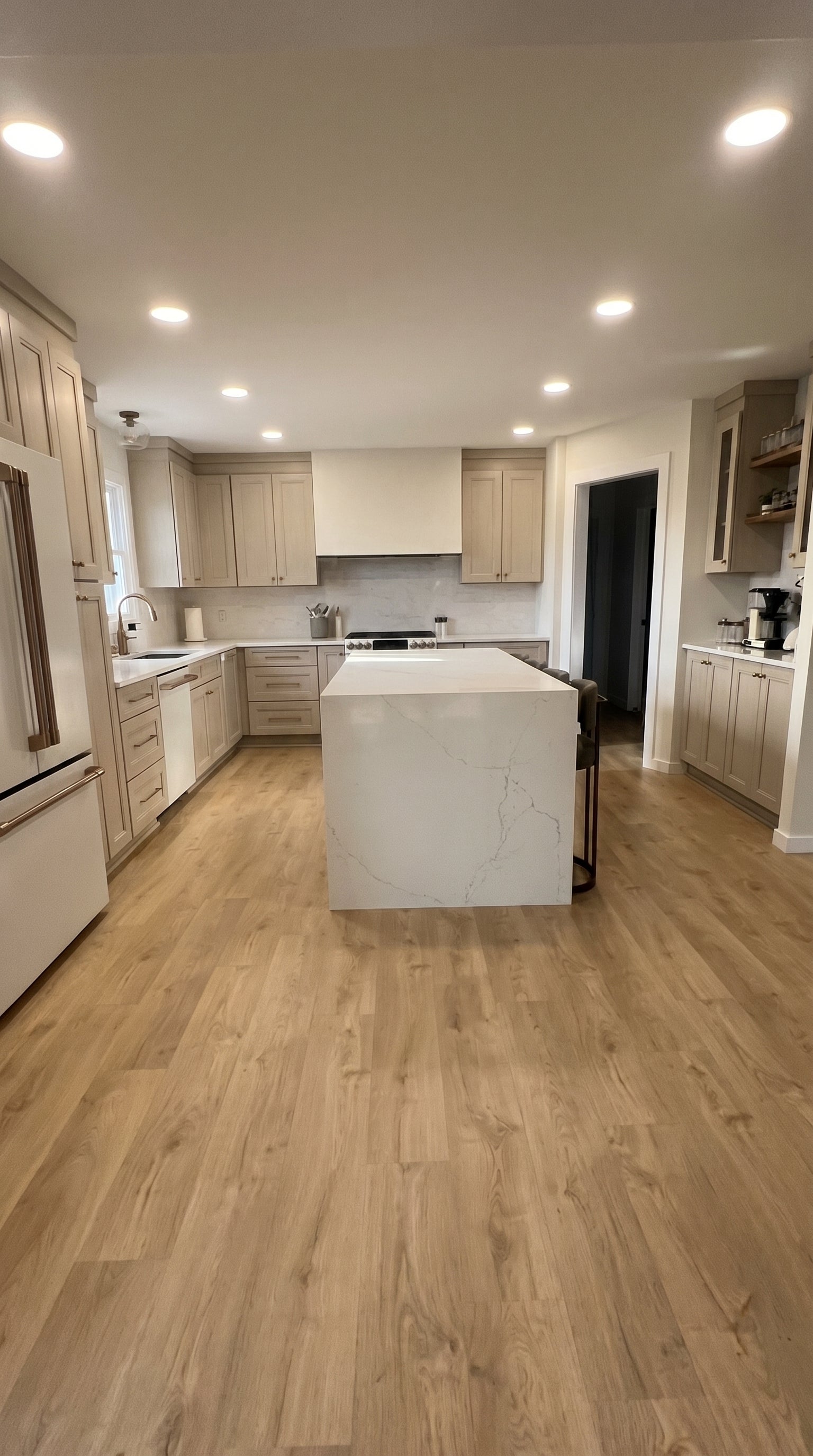
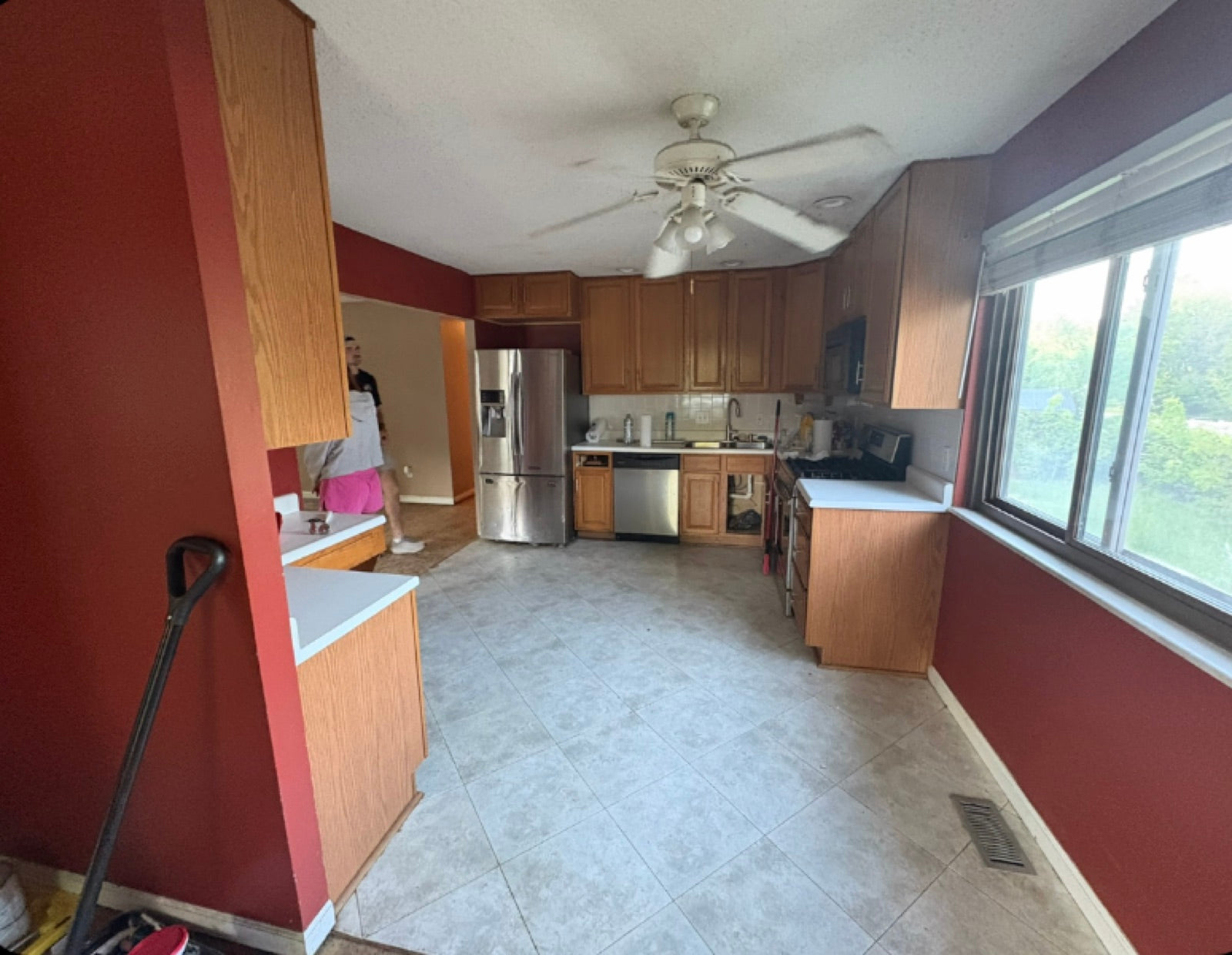
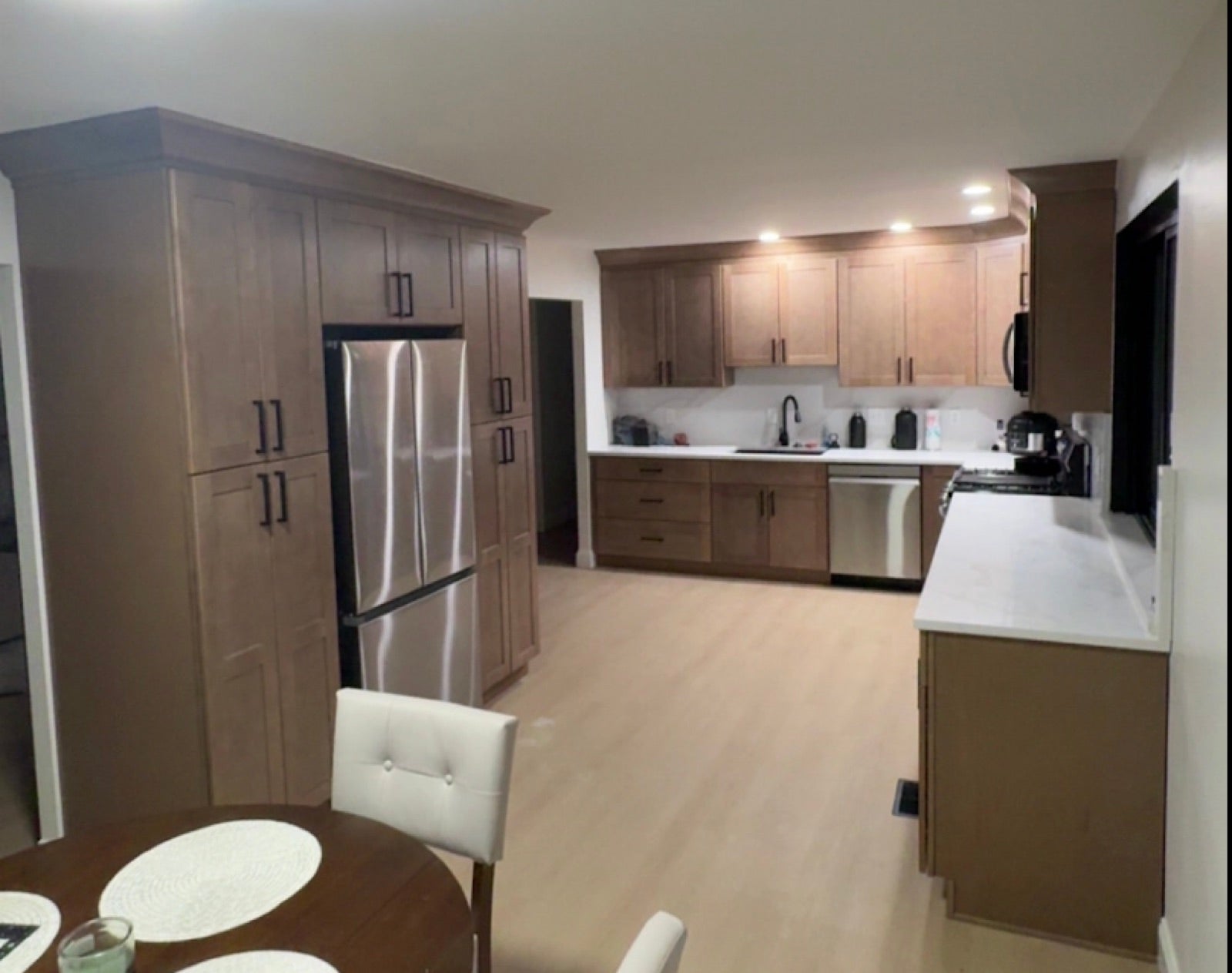
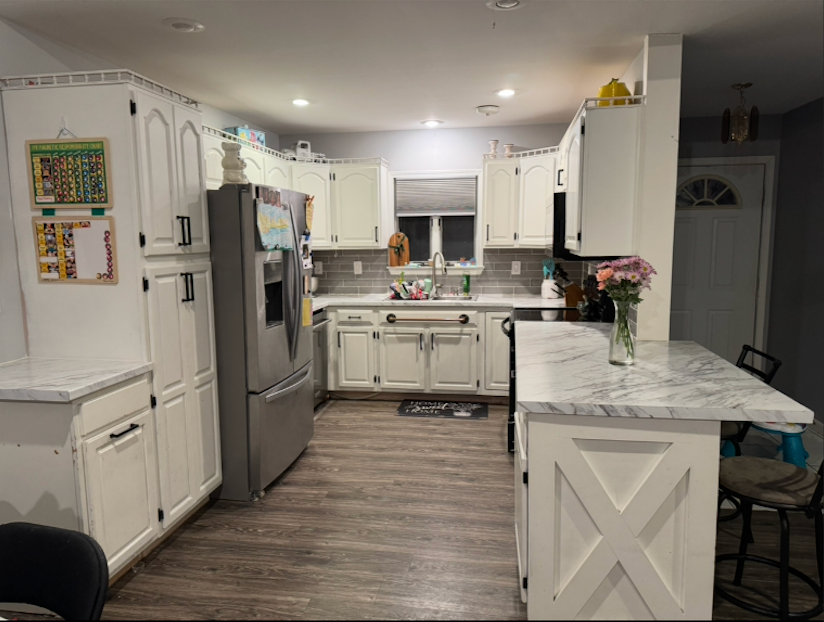
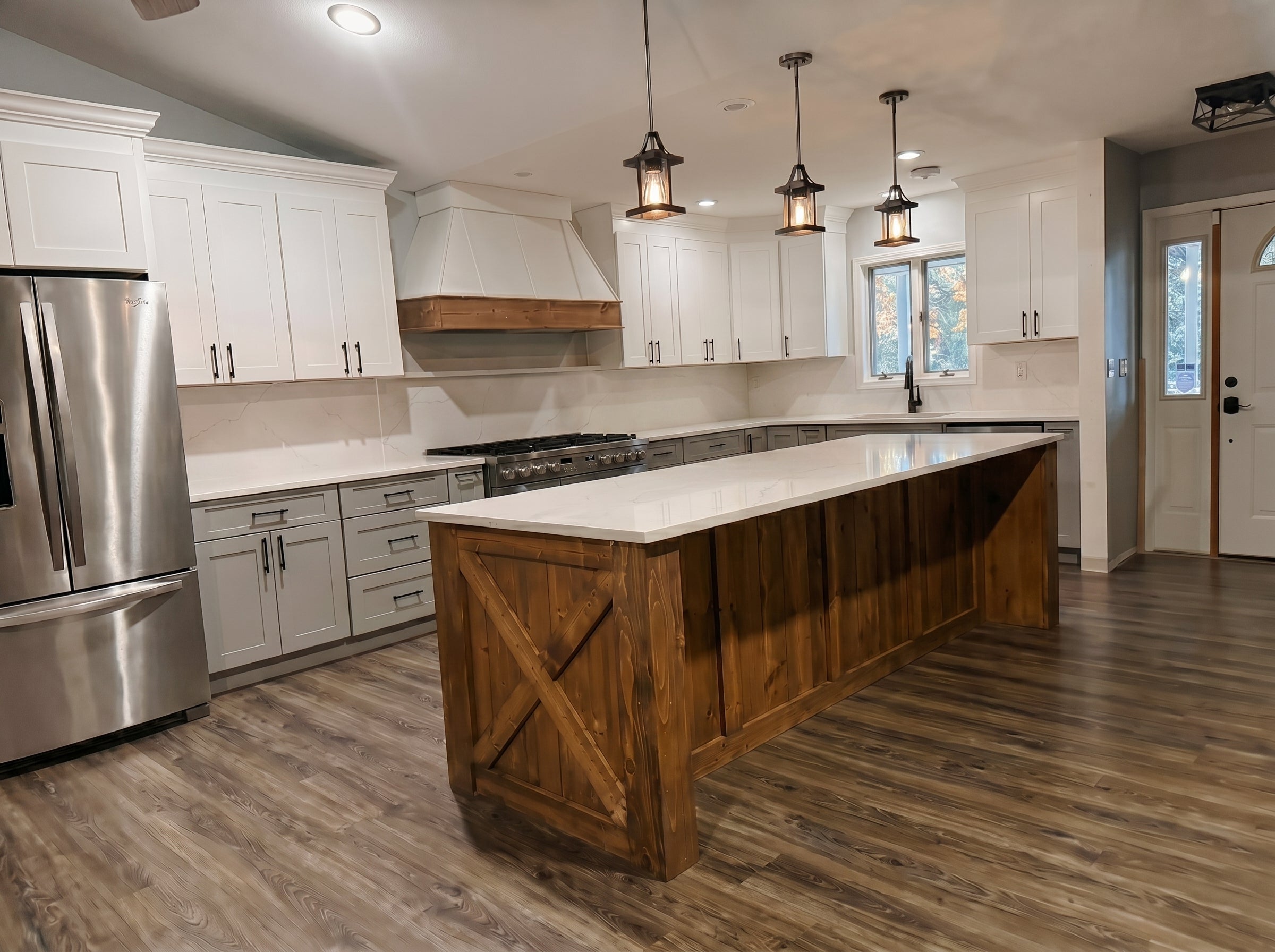
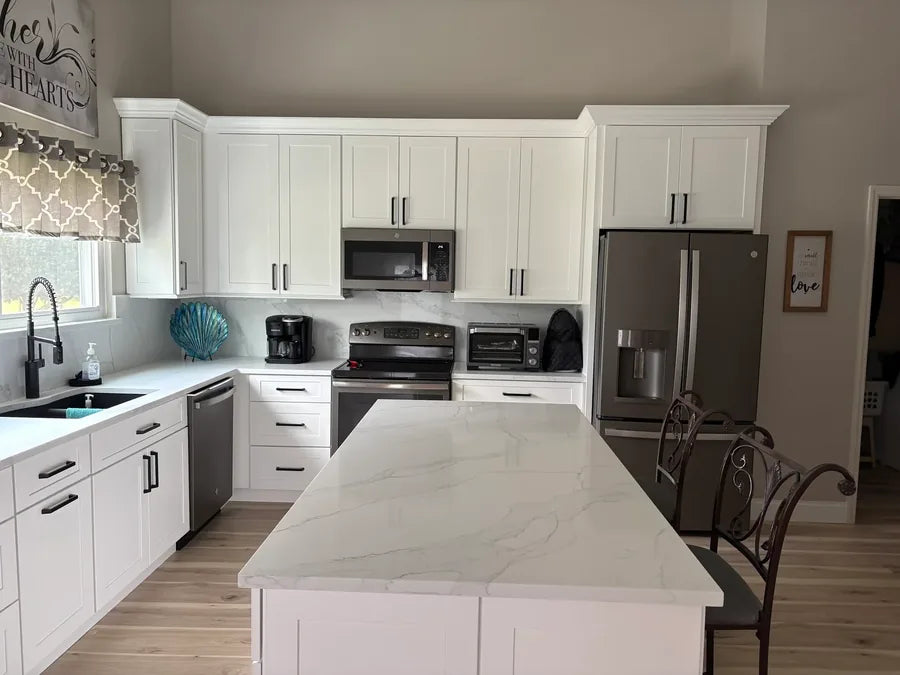
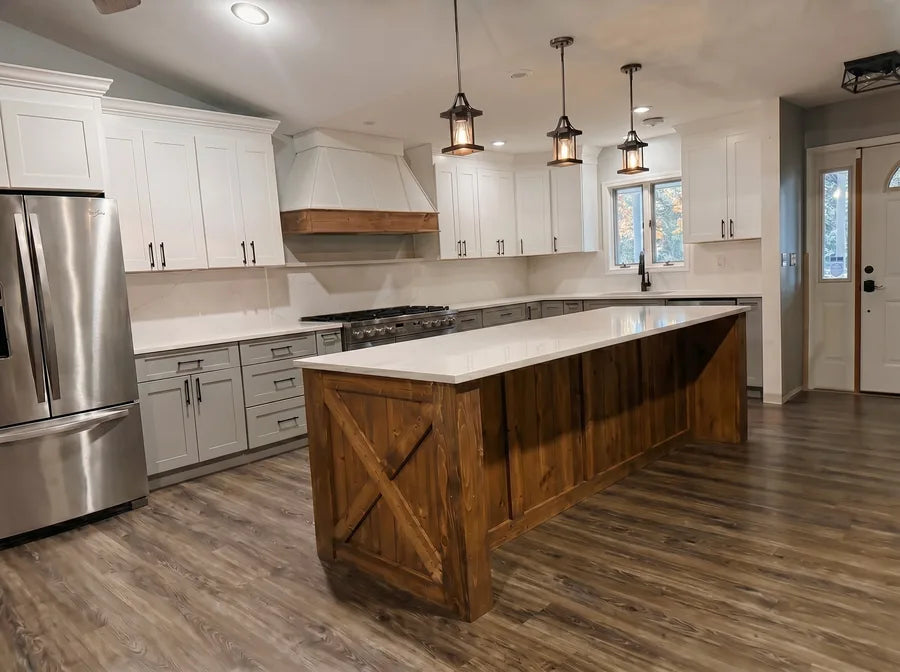
Three Saint Louis kitchens we replaced instead.
Old boxes out, new boxes in. These are our customers, photographed in their own homes.
Who is telling you this
Two founders, one showroom, no sales desk.

Andrew Powell
Co-founder
Andrew and Kaiden have been friends since middle school. They were working the same shifts at Walmart in 2020 when a team lead offered them a deal on his condo remodel: he buys the materials, they do all the work, they split the profit. Five months of nights and weekends later, that condo broke the price per square foot record for its zip code. Andrew runs the business side of STL Cabinetry, from pricing and vendor relationships to the systems that keep a kitchen on schedule from order to delivery.

Kaiden Walter
Co-founder
Kaiden designs every kitchen himself. Before STL Cabinetry sold a single cabinet, he and Andrew walked into every cabinet showroom in the region posing as contractors to learn what the experience felt like from the other side. It was cluttered, overwhelming, and nobody would give a straight answer. If you send us your kitchen, Kaiden is the one who designs it in 3D, prices it, and stays on it through delivery. Not a rotating sales desk.
400+
Kitchens delivered
4.8
89 Google reviews
A+
BBB rating
$0
Markup on tops or floors
Showroom at 1618 Country Club Plaza Drive, Saint Charles. Cabinets assembled in house in O'Fallon and hand delivered to your job site by our own team.
Questions we get asked.
- Should I reface my kitchen cabinets?
- Refacing makes sense when your cabinet boxes are solid plywood and structurally sound, your layout already works, you are selling soon, or your household genuinely cannot lose the kitchen for an install window. If the boxes are tired or the layout is wrong, refacing hides the problem instead of fixing it.
- What does cabinet refacing actually replace?
- New doors and drawer fronts, plus a thin veneer or laminate sheet glued over the front edges of your existing cabinet boxes. The boxes, shelves, drawer boxes, slides, interiors and layout all stay exactly as they are.
- Why does refaced cabinet veneer peel?
- The veneer or thermofoil skin is held on with adhesive. Heat and steam beside a dishwasher, water at a sink base, and seasonal humidity movement in the wood underneath all work against that adhesive until an edge lifts.
- Is refacing cheaper than new cabinets?
- Often not. Refacing is quoted per door and drawer front, and published 2026 averages put a refaced door around $435 with a full kitchen reface landing between $5,000 and $13,000. Our average cabinet order runs $8,000 to $10,000, and that replaces the boxes, drawer boxes, slides, hinges and layout too. We typically find refacing quotes come in above ours because the on-site labor is most of the invoice.
Reviews
Loved by St. Louis homeowners.
4.8 on Google across 89 reviews.
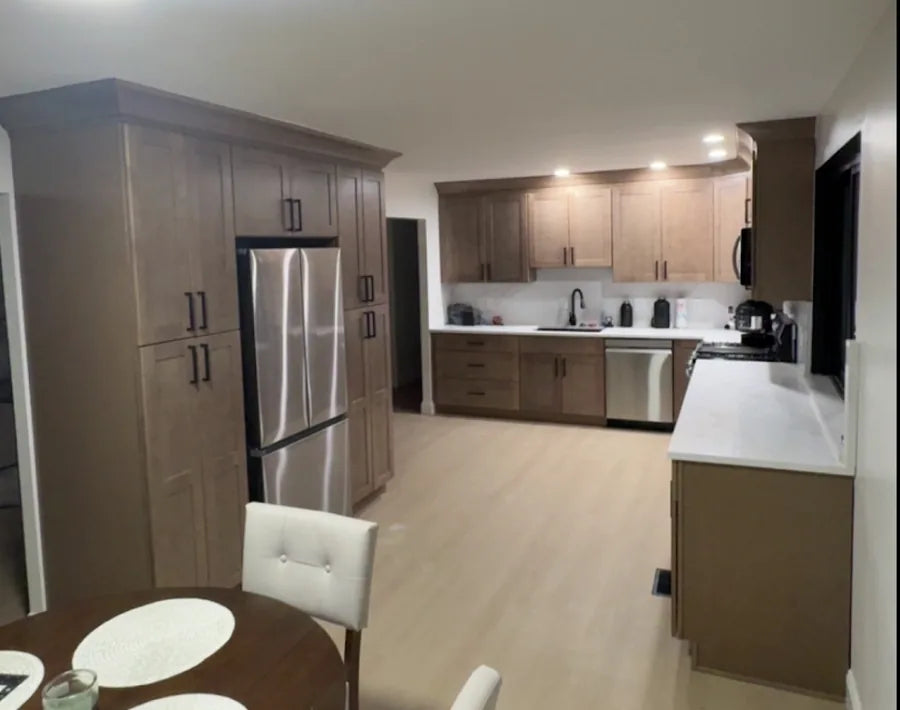 Google review
“They put real thought into the layout and the cabinet quality is excellent. Dealer cost on countertops and flooring saved me about $8,000. Would definitely recommend.”
 Google review
“From the very beginning, Kaiden was incredibly knowledgeable, responsive, and helpful. The quality of the cabinets exceeded our expectations, and the finished product is absolutely beautiful. Five stars all around!”
 Google review
“We could not be happier with our transformation. Communication was top notch, and he showed true care for his customers.”
Tell us what you are working with
Reface it or replace it?
Send us your kitchen. If refacing is the right call, we will say so. If it is not, Kaiden designs it in 3D and prices it out, free.
Get the straight answer first.
Free 3D design, same day pricing, and an honest read on whether your boxes are worth keeping.